Southeast Asia’s Digital Horizon. Part 2

In our previous blog on Southeast Asia’s digital economy, we identified vast growth opportunities alongside inherent challenges. Pivoting from understanding this dynamic landscape, we now focus on implementing the right delivery network solutions. As we venture deeper, Federated CDNs emerge as a strategic fit for the diverse and fragmented digital seas of Southeast Asia, coordinating like a fleet navigating through complex waters.
Federated CDNs: A Symphony of Digital Streams
Traditional CDNs have set the stage for rapid global content delivery, but Southeast Asia’s unique challenges demand a more customised solution. Federated CDNs represent this adaptation, functioning as a collaborative network of multiple, independent entities. Each contributes its strengths to form a robust and agile delivery system, significantly enhancing the user experience by addressing specific regional needs.
Three Ways Federated CDNs Help Businesses in Southeast Asia
Southeast Asia presents a robust digital economy rife with opportunities yet challenged by diverse infrastructures, regulatory complexities, and varying consumer expectations (as detailed in previous blog). Federated CDNs, a collaborative concept in content delivery, emerge as a compelling answer to these regional challenges. Let’s understand how the conceptual framework of Federated CDNs, with a diverse mix of network entities, is particularly relevant and beneficial for Southeast Asia’s digital landscape.
1. Addresses Infrastructure Fragmentation with Collaborative Networks
Southeast Asia’s digital landscape remains highly uneven, with significant gaps in internet connectivity and quality across countries and regions. This fragmentation demands an adaptive content delivery strategy.
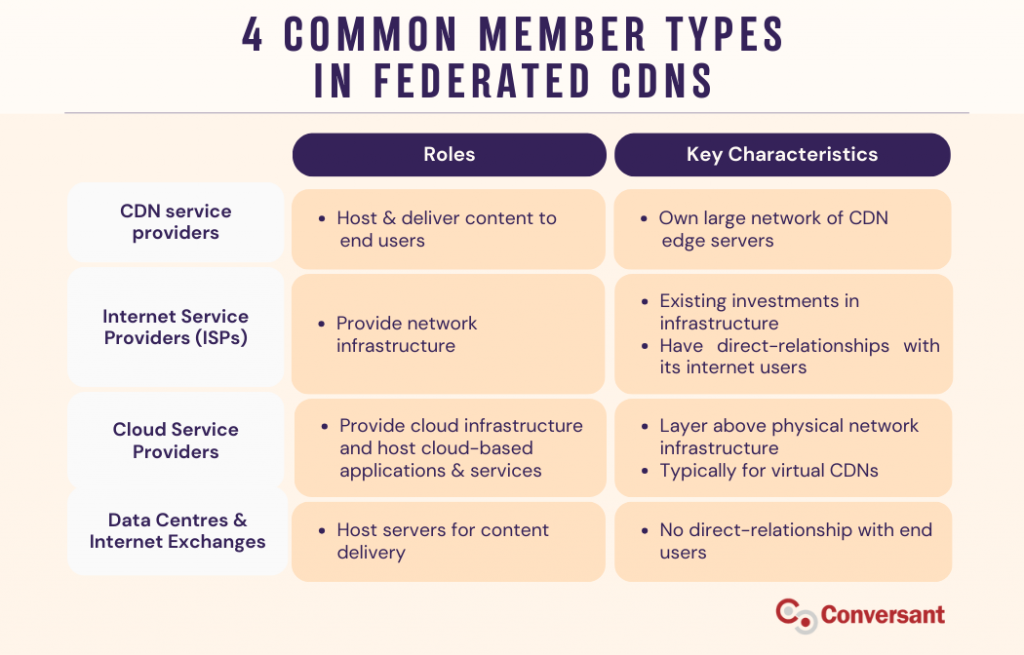
Federated CDNs address this challenge through a collaborative network of independent entities — including ISPs, cloud service providers, and content delivery networks. By enabling strategic routing and caching closer to end users, these networks help reduce latency and improve service reliability — vital in a region as diverse and distributed as Southeast Asia.
Equally important is their adaptability. Federated CDNs can dynamically respond to varying infrastructure conditions, whether delivering to high-speed urban networks or slower, less stable rural ones. This flexibility ensures a consistently improved content delivery experience for users, regardless of geography or infrastructure quality.
2. Navigating Regulatory Diversity with Tailored Solutions
Each nation within Southeast Asia has its distinct set of regulations affecting digital content, from data protection rules to censorship laws. The collaborative nature of Federated CDNs, which often includes local network providers alongside international players, allows for a more nuanced approach to these regulatory challenges. By understanding and adhering to local laws while maintaining a standard of efficient content delivery, Federated CDNs offer a balance between compliance and performance.
3. Enhancing User Experience through Efficiency and Localisation
Consumer expectations in Southeast Asia are high, with demands for quick, reliable, and relevant digital content. Federated CDNs address these needs by not only improving the speed of content delivery through efficient network routing but also enabling better localisation of content. By involving entities with regional expertise, Federated CDNs can ensure that content is not only quickly delivered but is also culturally and linguistically appropriate, enhancing user engagement and satisfaction.
Federated CDNs represent a strategic framework for tackling the unique digital delivery challenges in Southeast Asia. They provide a scalable, flexible, and efficient solution that respects the diverse needs of the region — from its varied infrastructure and regulatory landscapes to the high expectations of its digital consumers. As we continue to explore the evolving digital landscape of Southeast Asia, the role of Federated CDNs in shaping a more connected and responsive digital ecosystem becomes ever more evident.
Strategic Considerations in Choosing a Federated CDN
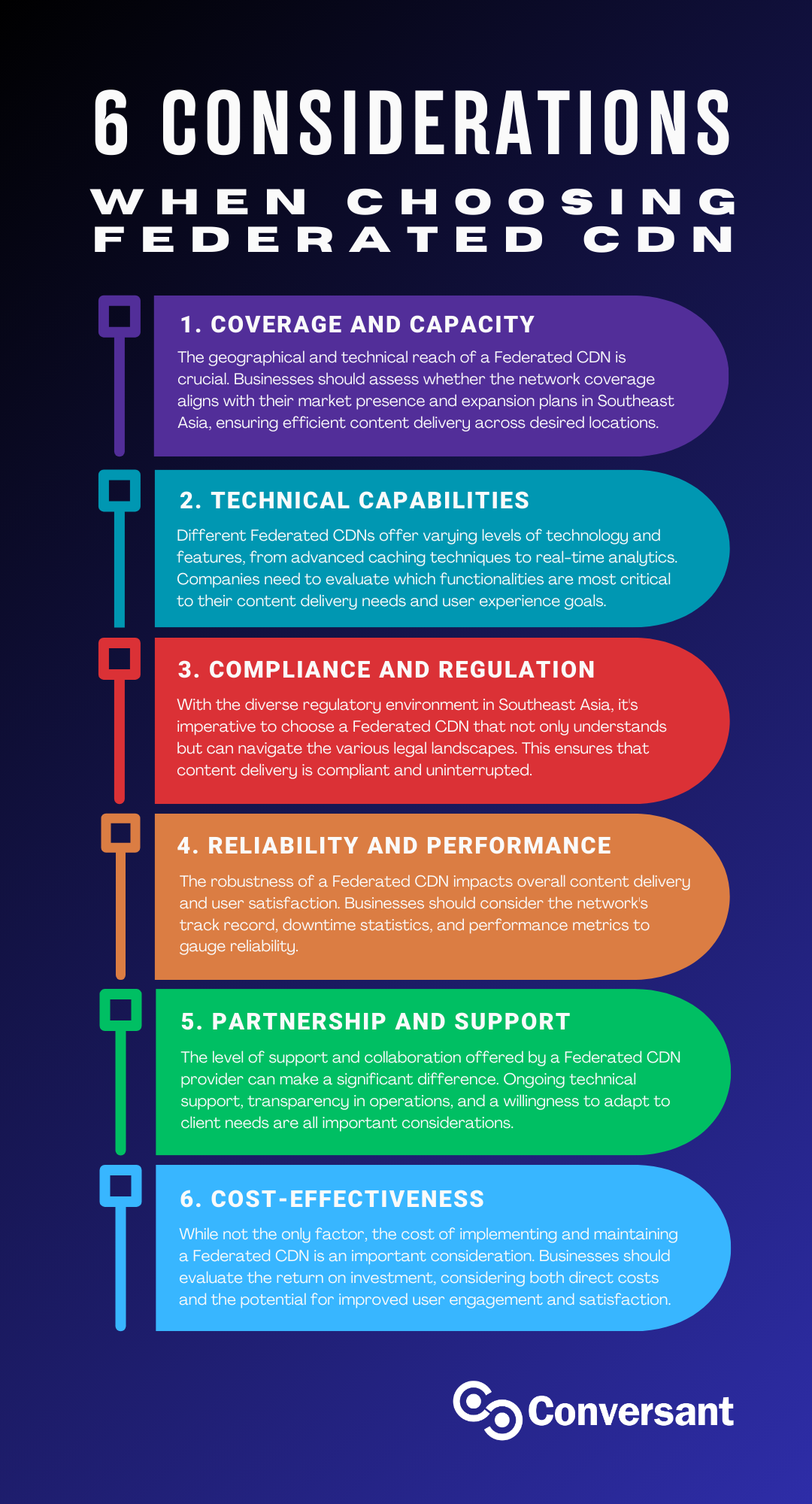
Selecting the right Federated CDN is more than a technical decision; it’s a strategic one that can significantly influence a business’s digital trajectory in Southeast Asia. As companies consider integrating Federated CDNs into their digital infrastructure, several key factors must be weighed to ensure alignment with their operational goals and regional dynamics.
To streamline this complex decision-making process, we’ve distilled the essence into a concise infographic. It highlights the six considerations that will guide you in selecting a Federated CDN that resonates with your business’s vision and operational needs in this vibrant digital ecosystem.
As we’ve explored, Federated CDNs are vital in enhancing content delivery across Southeast Asia’s varied digital landscape, offering strategic, scalable, and flexible solutions. While these networks bring numerous advantages, it’s crucial to recognise that not all are the same. The real effectiveness of a Federated CDN in the region lies in the strategic combination of network entities, especially the inclusion of local Tier 1 network operators.
SwiftFederation is an example of such a network, designed to meet the diverse needs of Southeast Asia. In our next blog – “Mastering SEA’s Digital Currents”, we will take a closer look at SwiftFederation, exploring how its specific features and regional partnerships provide a superior content delivery network tailored to the unique challenges and opportunities of Southeast Asia. Join us as we continue to explore the landscape of digital content delivery, offering insights and strategies for businesses looking to leverage the full potential of the digital boom in this vibrant region.
Uncover more insights and strategies with whitepaper. Read on.